
How to Spot a Legit Sweepstakes Casino: Red Flags, Checks & Scam Prevention
 Available in US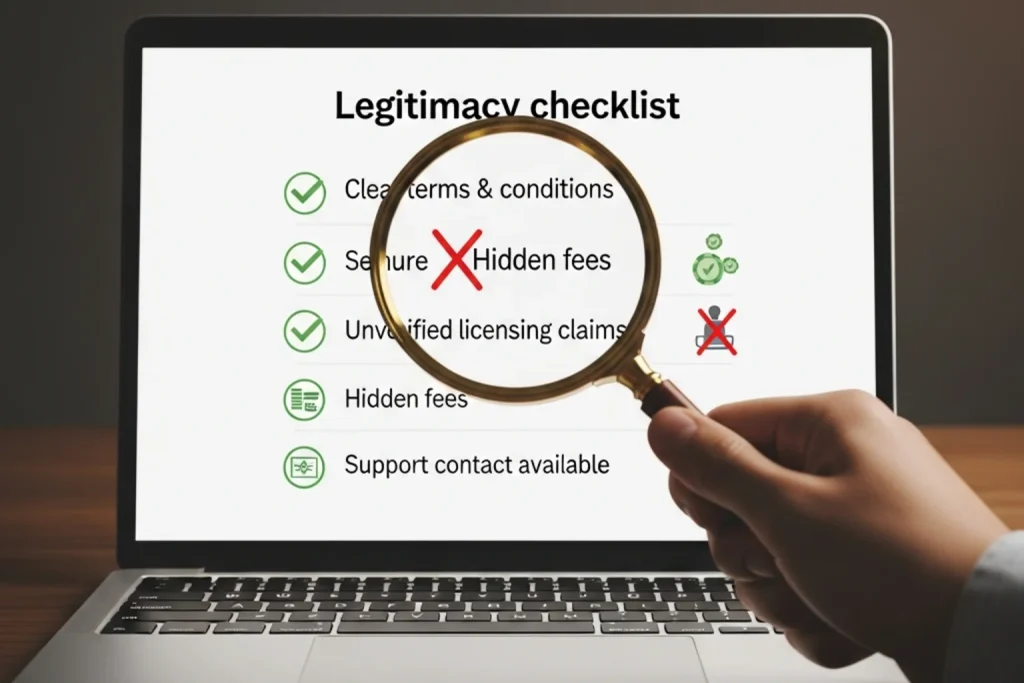
The sweepstakes casino market’s rapid growth has attracted legitimate operators and predatory copycats in roughly equal measure. For every established platform with a functional AMOE program and verifiable payout history, there’s a fly-by-night site mimicking the dual-currency model to collect personal data or payment information with no intention of ever processing a real withdrawal.
Distinguishing legitimate sweepstakes casinos from scams requires a systematic approach. This guide provides a concrete checklist for verifying sweepstakes casino legitimacy, identifies the red flags that signal fraudulent operations, explains how to read reviews critically, and outlines your options if you’ve already been victimized.
The Legitimacy Checklist
Run every new sweepstakes casino through these checks before registering, uploading personal documents, or making any purchase.
1. AMOE program exists and is documented. A legitimate sweepstakes casino must offer a free entry method — typically AMOE mail-in requests. Look for clearly published instructions in the Terms of Service, Sweepstakes Rules, or a dedicated FAQ page. If AMOE isn’t documented, the platform’s legal basis as a sweepstakes is questionable.
2. Terms of Service are detailed and accessible. Legitimate platforms publish comprehensive ToS covering playthrough requirements, minimum redemption thresholds, KYC procedures, account termination policies, and dispute resolution mechanisms. A missing or one-paragraph ToS is a disqualifying signal.
3. Corporate identity is verifiable. Check the footer and “About” page for a registered company name, jurisdiction of incorporation, and physical or registered agent address. Search the company name in state business registries or corporate databases. Established operators are transparent about their corporate structure.
4. Responsible gambling tools are present. Self-exclusion, purchase limits, and cool-off periods should be accessible from account settings. Their presence indicates that the operator has invested in compliance infrastructure beyond the bare minimum.
5. Game providers are identifiable. Legitimate platforms disclose which studios supply their games — Pragmatic Play, NetEnt, Hacksaw, or proprietary titles with named studios. If the game library has no provider attribution, you can’t verify the integrity of the RNG or the legitimacy of the software.
6. Industry membership or partnerships. Operators that belong to the SGLA (Social Gaming Leadership Alliance) — formed from the 2026 merger of SPGA and SGLA — have committed to a voluntary code of conduct. Membership isn’t a guarantee of quality, but it’s a trust signal that non-members don’t carry.
7. KYC process follows standard practices. Legitimate platforms request government ID, proof of address, and possibly partial SSN through a secure upload interface. They don’t ask for full SSN, bank login credentials, or payment details during registration (before any purchase intent is established).
8. Contact information and support channels are functional. Test the support system before committing your personal data. Send a pre-registration inquiry. A platform with responsive email or live chat support demonstrates operational investment. One that provides no contact method beyond a generic form is harder to hold accountable.
Red Flags That Signal a Scam
No AMOE at all. If you can’t find any reference to a free entry method, the platform either doesn’t understand the legal requirements of the sweepstakes model or is deliberately ignoring them. Either way, walk away.
Unrealistic bonus offers. A 500 SC sign-up bonus when the industry standard is 2–10 SC? That’s not generosity — it’s bait. Unsustainable bonuses are designed to attract registrations and payment data, not to build a viable platform. If the numbers don’t make commercial sense, they’re not real.
Copied content and branding. Some scam sites directly copy the visual design, game screenshots, and promotional text from legitimate platforms. Compare the site against established operators. If the layout looks identical to Chumba or Stake.us but the URL is different, it’s likely a clone site designed to harvest credentials.
No KYC required for withdrawals. Legitimate platforms require identity verification before processing prize payouts. A site that claims you can withdraw without any verification is either lying about the withdrawal process or collecting your bank details for fraudulent purposes.
Pressure to deposit immediately. Legitimate sweepstakes casinos let you explore the platform with free GC and sign-up SC before any purchase is necessary. A site that immediately pushes you toward a payment screen before you’ve had a chance to register and look around is prioritizing your money over your experience.
Social media presence without substance. Check the platform’s social channels. A legitimate operator has months or years of post history, genuine user interactions, and community engagement. A scam site has a freshly created social page with purchased followers and no real conversation.
Reading Reviews and Ratings Critically
Trustpilot scores are the first external check most players run — and they’re useful, but only if you read beyond the aggregate number.
Established sweepstakes casinos typically carry Trustpilot ratings between 2.0 and 4.0. Scores below 2.0 indicate systemic issues (usually around withdrawal delays or KYC problems). Scores above 4.5 on a site with hundreds of reviews may indicate review manipulation — genuine platforms with large user bases always accumulate a percentage of negative reviews from frustrated customers.
Look at the content of reviews, not just the star count. Verified-purchase reviews that describe specific withdrawal experiences, KYC timelines, or customer support interactions carry more weight than one-line five-star reviews. Patterns matter: if 30% of reviews mention the same withdrawal issue, it’s likely a real problem.
Reddit communities — r/sweepstakescasinos and r/Chumba in particular — provide unfiltered user feedback that’s harder to manipulate than Trustpilot. Search the platform name on Reddit and read recent threads. Users report specific issues, share withdrawal timelines, and flag suspicious behavior with a level of detail that review platforms don’t support.
The scale of sweepstakes advertising amplifies the scam risk. According to AGA data based on Sensor Tower research, sweepstakes casino advertising accounted for approximately 50% of all online casino ad impressions in early 2026. That saturation creates fertile ground for fake sites that mimic the visual language of legitimate advertising to lure unsuspecting players.
What to Do If You’ve Been Scammed
If you’ve shared personal information or made a payment to a fraudulent sweepstakes site, act quickly.
Contact your bank or payment provider. Request a chargeback on any payments made to the fraudulent site. Credit card chargebacks are generally more successful than debit card disputes. If you paid via cryptocurrency, recovery options are extremely limited — blockchain transactions are irreversible.
File a complaint with the FTC. The Federal Trade Commission accepts complaints about fraudulent sweepstakes at reportfraud.ftc.gov. While the FTC may not resolve your individual case, complaints contribute to pattern detection and enforcement actions against repeat offenders.
Report to your state Attorney General. State AG offices handle consumer fraud complaints and can issue cease-and-desist orders to fraudulent operators operating within their jurisdiction. This is especially effective if the scam targets players in a specific state.
Document everything. Screenshot the site, save confirmation emails, record transaction IDs, and preserve any correspondence with the platform. This documentation supports chargebacks, regulatory complaints, and potential civil action.
Change compromised credentials. If you used the same email/password combination on the fraudulent site as on other accounts, change those passwords immediately. Enable two-factor authentication on your email and financial accounts. If you submitted identity documents, consider placing a fraud alert on your credit report through Equifax, Experian, or TransUnion.