
Sweepstakes Coins Casinos: US Guide & Platform Data
 Available in US
Independent analysis backed by data.
In 2024, Americans spent billion on Gold Coin packages at sweepstakes coins casinos — platforms that operate entirely outside the traditional gambling framework through a dual-currency model. That number alone would be remarkable. But here is the twist: roughly 75% of players at these platforms never spend a cent, according to data from the Social and Promotional Gaming Association. The gap between those two facts tells the story of an industry that is simultaneously massive and misunderstood.
Sweepstakes coins casinos have grown into a .1 billion gross revenue segment, powered by a compound annual growth rate of 60 to 70 percent between 2020 and 2024. The model is deceptively simple: players receive virtual Gold Coins for entertainment and Sweeps Coins as promotional entries that can be redeemed for real prizes. No purchase is legally required. That structural distinction — the removal of "consideration" from the gambling equation — is why these platforms exist in a legal gray zone that state legislatures are now racing to define.
The pace of that legislative response has been dramatic. Six US states enacted outright bans on sweepstakes casinos during 2025, including California and New York. Florida's HB 591 is moving through committee in 2026 with felony-level penalties attached. Analysts at Eilers & Krejcik Gaming have already revised their net revenue forecast downward from .7 billion to billion for 2025, and the baseline projection for 2026 sits at .6 billion — a 10% contraction even in the most stable scenario.
This data-backed sweepstakes guide covers every layer of the model: how the currencies work, where these casinos are legal, what the payout ratios actually look like, which platforms lead the market, and what responsible play means in a segment where 90% of players already recognize the experience as gambling. Everything here is sourced from regulatory filings, industry research, and peer-reviewed data — not affiliate partnerships.
Data Analysis: Sweepstakes Coins Casinos in 2026
- The sweepstakes casino segment generated .1 billion in gross revenue in 2024, but net revenue after prize payouts was roughly .4 billion — operators return 65 to 70% of Gold Coin sales as Sweeps Coin prizes.
- Only about 12% of players ever make a purchase; the remaining 88% play entirely free through daily logins, AMOE mail-in entries, and sign-up bonuses.
- Six states banned sweepstakes casinos in 2025, and pending bills in Florida and elsewhere could shrink the addressable market further in 2026.
- Payout ratios at sweepstakes platforms (65 to 70%) are significantly lower than regulated iGaming RTPs (around 95%), a structural gap that every player should understand before redeeming.
- A Lancet meta-analysis found that 15.8% of online casino-style players exhibit problem gambling behavior — the highest rate across all gambling formats.
What Are Sweepstakes Casinos and Why Are They Everywhere?
A sweepstakes casino is an online platform that offers casino-style games — slots, blackjack, roulette, poker variants — without meeting the legal definition of gambling in most US jurisdictions. The mechanism relies on a foundational principle of American sweepstakes law: if you remove one of the three elements required to constitute gambling (consideration, chance, and prize), the activity falls outside gambling statutes. Sweepstakes casinos remove consideration by ensuring that no purchase is necessary to participate.
As Magnus Boberg, founder of JustGamblers, explained it: "Traditional gambling requires three elements: consideration, chance, and prize. Sweepstakes sites do not require payment, so they bypass regulations." That framing is the legal backbone of the entire industry — and the precise point where critics and regulators push back hardest.
The model works through two virtual currencies. Gold Coins are purchased for entertainment value and cannot be redeemed for anything of monetary value. Sweeps Coins are distributed as free promotional entries — bundled with Gold Coin purchases, earned through daily logins, or obtained via Alternative Method of Entry requests sent by mail. Only Sweeps Coins can be redeemed for cash prizes, and because they are technically given away rather than sold, the "consideration" element is absent from the transaction. At least, that is the argument.
The scale of this model has become impossible to ignore. According to a KPMG industry primer published in 2025, the social casino market — of which sweepstakes platforms are the fastest-growing segment — reached approximately .1 billion in gross gaming revenue during 2024. The sweepstakes segment specifically has grown at a compound annual rate of 60 to 70 percent over the four years from 2020 to 2024. For context, the broader US commercial gaming industry posted .72 billion in gross gaming revenue for 2025, according to the American Gaming Association's revenue tracker. Sweepstakes platforms have carved out a meaningful share of the total gaming ecosystem in under a decade.
The history is shorter than most people assume. Social casinos — free-to-play platforms without any redemption feature — have existed since the early days of Facebook gaming. Americans spent more than billion on social casino virtual currency over the past decade, according to data compiled by the SPGA and Eilers & Krejcik Gaming. But the sweepstakes variant, which added the crucial prize-redemption layer, did not gain mainstream traction until around 2018 when platforms like Chumba Casino and LuckyLand Slots began scaling aggressively. By 2025, the SPGA estimated that roughly 55 million Americans had played at a sweepstakes casino — a user base that exceeds the combined populations of New York and Florida.
What makes the growth trajectory especially striking is the demographic it has attracted. These are not exclusively young, tech-native users. According to industry trend data, around 58% of sweepstakes casino players fall within the 25-to-44 age bracket, but the remaining 42% spans from college students to retirees. The appeal is partly geographic: in the 44 or more states where sweepstakes casinos remain legal, they represent the only online casino-like experience available to players who live outside the handful of regulated iGaming states — New Jersey, Michigan, Pennsylvania, West Virginia, Connecticut, Delaware, and Rhode Island.
How Sweeps Coins Work: The Dual-Currency Engine
Gold Coins: The Play-Money Side
Gold Coins are the entertainment currency at every sweepstakes casino. You buy them, you play with them, and you cannot redeem them for anything of real-world value. That is the whole point — from a legal standpoint, purchasing Gold Coins is comparable to buying tokens at an arcade or virtual currency in a mobile game. The transaction is classified as a purchase of digital entertainment goods, not a wager.
Packages typically range from .99 to .99, with larger bundles offering better per-coin rates. The pricing varies by platform but follows a consistent structure: the more you spend, the more Gold Coins you receive per dollar. Most platforms accept standard payment methods including Visa, Mastercard, ACH bank transfers, and increasingly, cryptocurrency. A few platforms have experimented with Apple Pay and Google Pay integration, though availability depends on the operator.
What you can do with Gold Coins is straightforward: spin slots, play table games, and enjoy the platform's full game library for as long as your balance lasts. What you cannot do is convert them back into cash, transfer them to another player, or redeem them for prizes. That limitation is not a design flaw — it is the legal architecture that keeps the entire model classified as entertainment rather than gambling.
Sweeps Coins: The Redeemable Prize Currency
Sweeps Coins are where the model gets interesting. Unlike Gold Coins, SC can be redeemed for real cash prizes — typically at a rate of 1 SC to , though the exchange rate can vary by platform. But you never directly purchase Sweeps Coins. Instead, they are distributed through promotional channels: bundled as a bonus with Gold Coin purchases, awarded through daily login bonuses, given to new players at signup, earned through social media contests, or obtained via the AMOE (Alternative Method of Entry) process.
This distinction is legally critical. Because Sweeps Coins are always given away free — never sold — the argument is that no "consideration" changes hands for the chance to win a prize. The SC you receive with a .99 Gold Coin package are technically a promotional bonus, not something you paid for. Whether you find that reasoning convincing or circular probably depends on whether you are a sweepstakes casino operator or a state attorney general.
According to an AGA survey of 2,250 sweepstakes players, 68% stated that their primary goal was winning real money. That finding undercuts the "entertainment only" framing that operators often promote. Players understand what they are doing — they are playing casino games with the expectation of cashing out. The legal wrapper of Sweeps Coins as "promotional entries" is a structural distinction, not an experiential one.
The Dual-Currency Model in Practice
Here is how the dual-currency system works in a typical session. A player logs in and receives a daily bonus of, say, 10,000 Gold Coins and 1 SC. They can play indefinitely with the GC, which have no cash value. If they want more SC — the currency that actually matters for redemption — they purchase a Gold Coin package. A .99 package might include 200,000 GC and 20 SC. The SC are the reason most paying players make the purchase; the GC are the legal vehicle that makes the transaction a "purchase of virtual entertainment."
The economics behind this model are substantial. In 2024, sweepstakes casinos generated billion in Gold Coin package sales. Operators return approximately 65 to 70 percent of those sales to players in the form of Sweeps Coin prizes, resulting in net revenue of roughly .4 billion for 2024, according to analysis by RG.org based on EKG and operator data.
The conversion funnel is remarkably narrow. Only about 12% of sweepstakes casino players ever make a purchase. The other 88% play entirely on free coins obtained through logins, AMOE entries, and promotional bonuses. That statistic cuts both ways: it supports the industry's claim that sweepstakes casinos are genuinely free-to-play, but it also means the billion in GC sales is concentrated among a relatively small base of paying users. The revenue model, in other words, looks a lot like the whale-driven economics of mobile gaming — a small percentage of high-spending users funds the experience for everyone else.
For paying players, the average spend remains modest. The typical purchase among those who do spend is less than per transaction, according to EKG survey data cited by the SPGA. But some players spend far more, and the ARPU (average revenue per user) across the paying base ranges from to per month depending on engagement level.
Legality by State: Where You Can and Cannot Play
The 40-Plus States Where Sweepstakes Casinos Operate
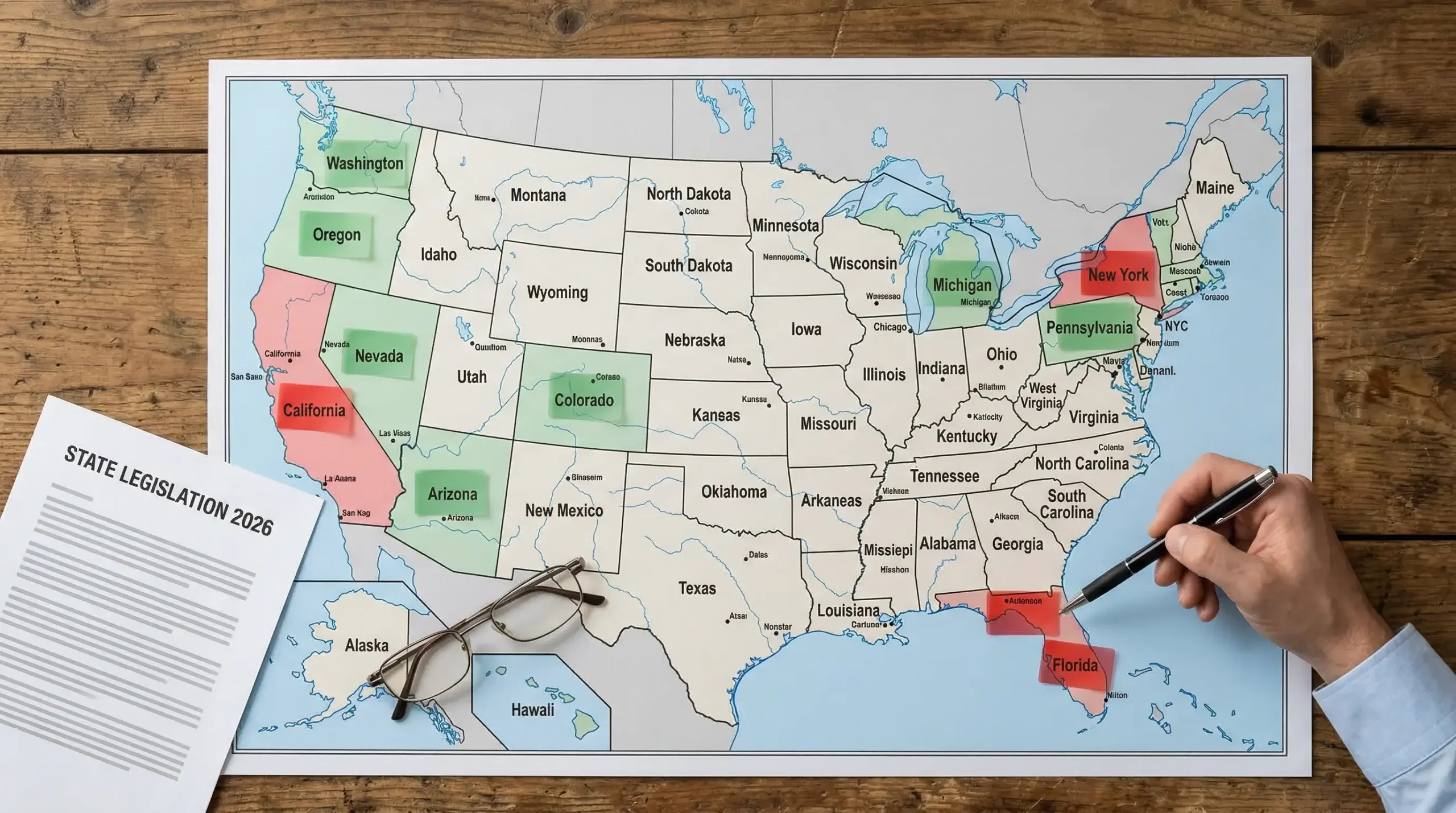
As of early 2026, sweepstakes casinos remain accessible in roughly 44 US states. The legal basis differs slightly from state to state, but the general principle is consistent: because sweepstakes casinos frame their model as promotional gaming with no purchase necessary, they operate in the gap between gambling statutes and consumer promotion laws. States without explicit sweepstakes casino legislation — which is most of them — default to allowing operation under existing sweepstakes and contest regulations.
The majority of players in these states encounter sweepstakes casinos through digital advertising, social media promotions, or word of mouth. There is no state licensing requirement in most jurisdictions, no gaming commission oversight, and no mandatory responsible gambling framework. This regulatory vacuum is precisely what concerns both traditional gaming operators and consumer protection advocates — and what has driven the recent wave of state-level bans.
Banned States: California, New York, and the Growing List
The legislative landscape shifted dramatically in 2025. According to Gambling Insider's market review, six states enacted laws specifically targeting sweepstakes casinos during the year: California, New York, Connecticut, Montana, New Jersey, and Nevada (through expanded enforcement authority).
California's ban was the most consequential. Assembly Bill 831 prohibits the operation of dual-currency sweepstakes platforms, with penalties reaching ,000 in fines and up to one year of imprisonment. The law took effect on January 1, 2026. The impact on the industry is outsized because California accounted for an estimated 17 to 20 percent of total US sweepstakes revenue, according to Eilers & Krejcik Gaming data presented at G2E in October 2025.
The political dynamics in California were telling. As Shawn Fluharty, president of the National Council of Legislators from Gaming States (NCLGS) and West Virginia delegate, noted: "Sweepstakes couldn't get one vote in California. You know how hard that is?" The bipartisan consensus against sweepstakes casinos in the state reflected pressure from tribal gaming interests, traditional casino operators, and consumer protection groups alike.
New York's ban carried its own financial weight. The state generated an estimated 2 million in sweepstakes casino sales during 2024, according to EKG data compiled for the SGLA. Governor Hochul signed SB 5935 into law, effectively closing the state to sweepstakes operators.
The enforcement posture has been aggressive in some jurisdictions. Los Angeles City Attorney Hydee Feldstein Soto, who filed a civil enforcement action against Stake.us in August 2025, described the platform as "a rogue and real money gambling racket" — language that signals zero tolerance from municipal law enforcement.
Pending Legislation in 2026
The pipeline of anti-sweepstakes legislation is not slowing down. Florida's HB 591 is the most closely watched bill in 2026 — an 86-page measure that would classify sweepstakes casino operation as a third-degree felony. Florida represents approximately 8.5% of industry revenue, and the SGLA has estimated that a ban would eliminate a potential million annual tax contribution at a 6% rate on purchases.
The financial implications of continued state bans have forced analysts to recalibrate their projections. Eilers & Krejcik Gaming revised their 2025 net revenue forecast from .7 billion down to billion following the California ban. Their 2026 outlook offers three scenarios: a base case of .6 billion (a 10% decline), a bull case of .55 billion, and a bear case of .6 billion if additional major-market bans pass.
The industry's own lobby has taken a conciliatory approach. Jeff Duncan, executive director of the SGLA and former South Carolina congressman, stated at the December 2025 NCLGS conference: "We want to be regulated. We want to pay taxes." Whether that rhetorical pivot translates into legislative outcomes remains an open question heading into the second half of 2026.
How to Get Free Sweeps Coins Without Spending a Dollar
No-Deposit Sign-Up Bonuses
Nearly every sweepstakes casino offers free Sweeps Coins upon registration — no purchase required. The amounts vary by platform but typically range from 1 to 10 SC for completing the sign-up process and verifying your email address. Some platforms also include a batch of Gold Coins (often 100,000 to 250,000 GC) so new players can immediately explore the game library in play-for-fun mode.
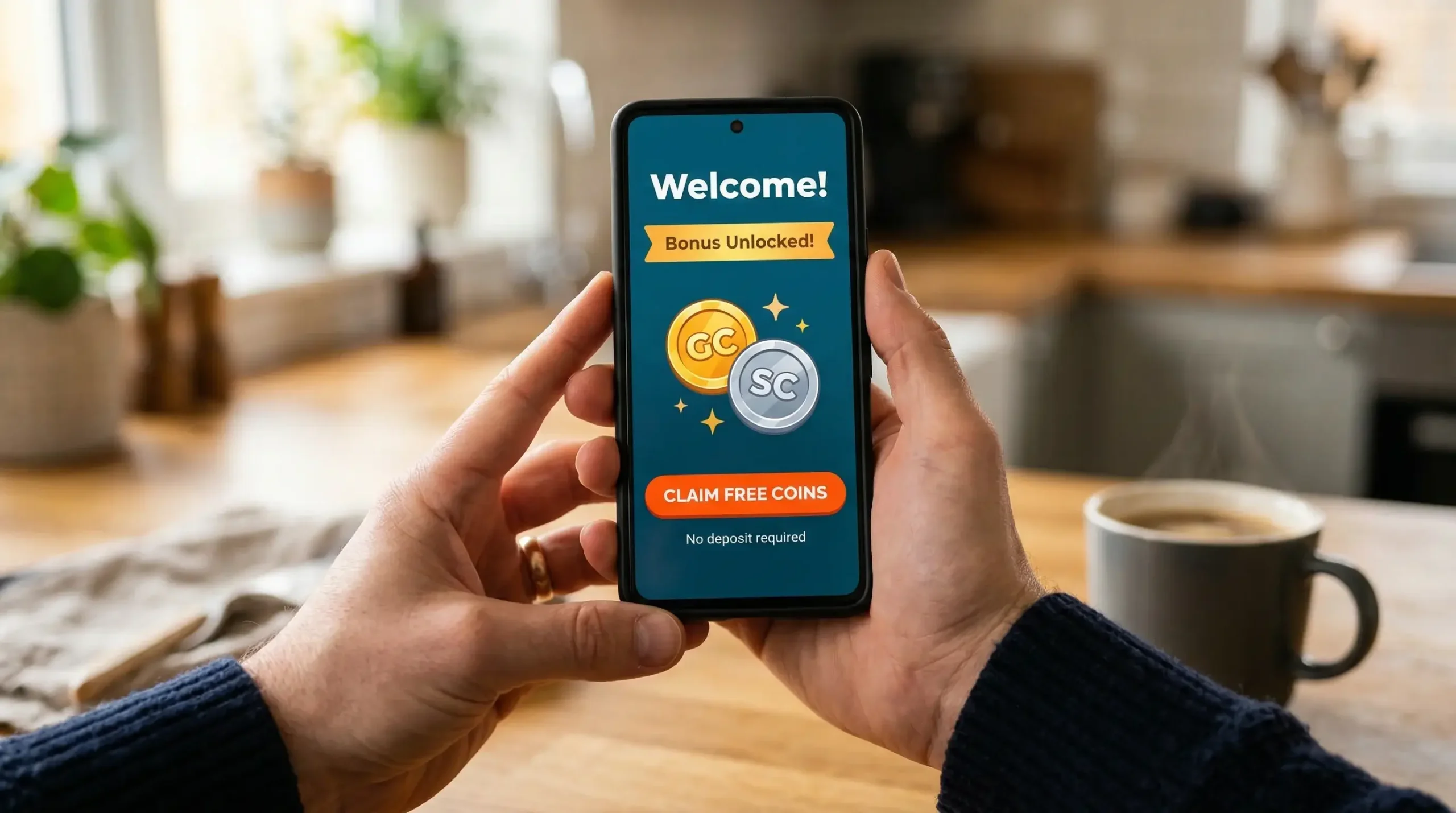
The signup bonus is not charity. It is a customer acquisition tool designed to get users into the platform and playing. The calculus for operators is straightforward: a SC bonus costs the platform roughly in potential prize liability, but the lifetime value of even a small percentage of those users converting to paying players far exceeds that cost. Given that about 75% of sweepstakes casino players never make a purchase, these bonuses represent a genuine path to playing for free — but they also serve as the entry point of a monetization funnel.
Daily Login Rewards
Logging in each day is the simplest way to accumulate free Sweeps Coins over time. Most platforms award between 0.3 and 1 SC per daily login, often with escalating bonuses for consecutive-day streaks. A player who logs in every day for 30 days might collect 15 to 30 SC without spending a dollar — enough to test a handful of games in SC mode and understand the redemption mechanics.
The daily login model borrows heavily from mobile gaming engagement mechanics. Streak multipliers, bonus wheels, and surprise reward pop-ups are common. The purpose is retention: each daily login reinforces the habit loop and increases the statistical likelihood that a free player eventually converts to a paying one. Whether that is clever game design or dark-pattern psychology depends on your perspective — but the industry treats daily active users as a core KPI.
AMOE: The Mail-In Method
The Alternative Method of Entry is the legal linchpin of the sweepstakes casino model. Federal sweepstakes law requires that participants have a way to enter without making a purchase, and AMOE fulfills that requirement. Players can request free Sweeps Coins by mailing a handwritten letter to the casino operator. The letter must typically include your name, address, and a specific request phrase.
Processing times vary from 7 to 14 business days, and most platforms limit the number of AMOE requests to one per day or a set number per week. The typical award is 5 to 10 SC per valid request. It is a low-throughput method — sending a stamped letter for worth of SC is not exactly efficient — but it exists because it must. Without AMOE, the "no purchase necessary" claim collapses and the sweepstakes classification becomes indefensible.
Social Media Giveaways
Platforms regularly run promotions on Facebook, Instagram, X, and TikTok that award free SC for following accounts, sharing posts, commenting on content, or tagging friends. The amounts are small — usually 1 to 5 SC per promotion — but frequent players who track multiple platforms can accumulate a modest balance over time. Some operators run weekly contests with larger SC prizes for social engagement, effectively using their player base as an unpaid marketing force.
Referral Programs
Most sweepstakes casinos offer referral bonuses that reward both the referrer and the new player. The typical structure awards 5 to 20 SC to each party when the referred player completes registration and verification. Some platforms add a second bonus layer: if the referred player makes their first purchase, the referrer receives additional SC or a percentage-based reward. Referral programs are especially common among mid-tier platforms trying to scale their user base against established leaders like Chumba Casino and WOW Vegas.
The aggregate effect of all these free SC channels is meaningful. A dedicated free player who combines daily logins, AMOE requests, social media promotions, and referral bonuses can realistically accumulate 50 to 100 SC per month. That is not enough to replicate a real-money casino experience, but it does allow genuine engagement with the platform's SC game modes — and the occasional small redemption. The fact that the average paying player spends less than per transaction puts the free-play path in perspective: the gap between paying and non-paying players is narrower than you might expect.
Best Sweepstakes Casinos: A Data-Backed Comparison
Platform Comparison Table
| Platform | Sign-Up Bonus | Game Count | Key Providers | Min. Redemption | Payout Methods |
|---|---|---|---|---|---|
| Chumba Casino | 2 SC free | 150+ | VGW proprietary | 100 SC | Bank transfer, Skrill |
| WOW Vegas | 5 SC + 250K GC | 900+ | Pragmatic Play, Betsoft | 10 SC | Bank, crypto, Skrill |
| Stake.us | Variable (promo) | 1,000+ | Hacksaw, Pragmatic, proprietary | 50 SC | Crypto primary |
| Pulsz | 5 SC + 350K GC | 700+ | NetEnt, Pragmatic, Hacksaw | 50 SC | Bank, crypto, Skrill |
| LuckyLand Slots | 10 SC free | 80+ | VGW proprietary | 50 SC | Bank transfer, Skrill |
| McLuck | 7.5 SC + 57.5K GC | 600+ | Pragmatic, BGaming | 50 SC | Bank, crypto, gift cards |
The numbers in this table shift frequently as platforms adjust their promotional offers and add new game providers. Treat it as a snapshot — verification at the platform's own site is always the last step before signing up.
Mini Reviews of Leading Platforms
Chumba Casino. Operated by VGW, the Australian company that essentially created the modern sweepstakes casino model. Chumba is the industry's revenue leader by a significant margin. VGW reported A.13 billion in total revenue (~.1 billion) for its fiscal year 2024, with Chumba as its flagship property. Of that, the company spent .83 billion on sweepstakes prizes — up from .2 billion the prior year. The game library is smaller than newer competitors — roughly 150 titles — but all games are developed in-house, giving VGW full control over RTP configurations and game mechanics. Payout processing is reliable but not the fastest in the market, and the 100 SC minimum redemption threshold is higher than most competitors.
WOW Vegas. A newer entrant that has rapidly scaled its game library to over 900 titles by integrating content from major providers like Pragmatic Play and Betsoft. The 10 SC minimum redemption is the lowest among major platforms, making it accessible to free players. WOW Vegas also supports cryptocurrency payouts alongside traditional banking options, which appeals to players seeking faster withdrawal processing.
Stake.us. The sweepstakes arm of the broader Stake brand, which operates a crypto casino internationally. Stake.us offers the largest game library among sweepstakes platforms — more than 1,000 titles — and leans heavily into crypto-native features. The platform was the target of the Los Angeles City Attorney's lawsuit in 2025, which cast a shadow over its US operations. Game selection and speed are its strengths; regulatory risk is its most significant concern.
Pulsz. A well-rounded platform with roughly 700 games and integrations from NetEnt, Pragmatic Play, and Hacksaw Gaming. Pulsz is notable for its VIP program, which offers tiered rewards from Bronze through Elite. The platform supports multiple payout methods and has maintained a relatively clean regulatory profile compared to some competitors.
LuckyLand Slots. Another VGW property, operating alongside Chumba but with a distinct branding and game library. LuckyLand focuses on slots with a smaller but curated selection of around 80 titles. The 10 SC sign-up bonus is one of the more generous no-deposit offers in the market. Like Chumba, all games are VGW proprietary.
Games and Providers: What You Actually Get to Play
Slot Types
Slots dominate every sweepstakes casino's game library by volume. The types mirror what you would find at a regulated online casino: five-reel video slots with multiple paylines, Megaways-style variable reel engines, cascading reels (also called tumble or avalanche mechanics), hold-and-spin bonus features, jackpot slots with progressive or fixed prize pools, and classic three-reel designs for players who prefer simpler mechanics.
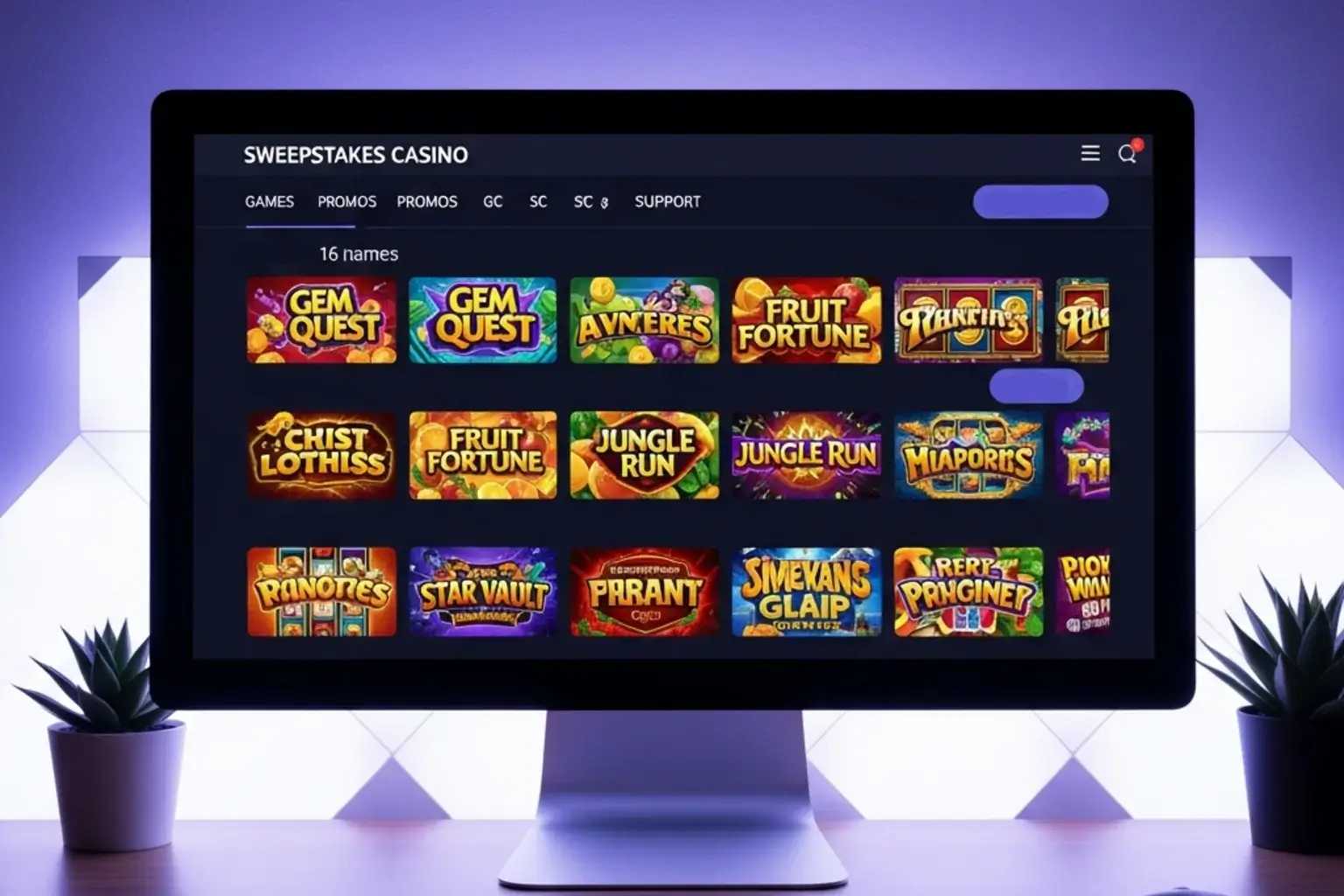
The major difference is sourcing. VGW's platforms (Chumba, LuckyLand) run entirely on proprietary slots developed in-house. Other platforms license content from established providers — Pragmatic Play, NetEnt, Hacksaw Gaming, BGaming, Betsoft, and a growing list of smaller studios. The result is a fragmented landscape where game availability varies significantly between platforms. A slot you find at Pulsz may not exist at WOW Vegas, and vice versa. Players who prioritize game variety tend to maintain accounts at multiple sweepstakes casinos.
Table Games
Table game selection is thinner than slots but covers the essentials. Most platforms offer at least blackjack, roulette (American and European variants), video poker, and baccarat. A few add niche options like Casino Hold'em, three-card poker, or Caribbean stud. These are all RNG (random number generator) versions — computerized simulations of the card or wheel, not live-dealt games.
Table games tend to attract a smaller share of sweepstakes players than slots, which is why operators invest less development effort in this category. But for players who understand basic strategy, RNG blackjack and video poker often deliver better theoretical returns than the average slot — a pattern that holds across both sweepstakes and regulated platforms.
Live Dealer Options
Live dealer gaming at sweepstakes casinos is still in its early stages. A handful of platforms have introduced live-streamed blackjack and roulette tables operated by human dealers in studio environments, with players wagering Sweeps Coins in real time. The experience replicates what you would find at a regulated live casino — overhead cameras, card shoes, professional dealers — but the availability is limited to peak hours on most platforms, and the SC betting limits tend to be lower than what you would see at a traditional online casino.
The integration challenge is partly technical (live dealer infrastructure is expensive) and partly legal (streaming live gambling-style content adds regulatory complexity). Expect this category to grow as platforms invest in differentiation, but for now, slots and RNG table games are where 95% of the action happens.
RTP on Sweepstakes Platforms
Return to Player (RTP) is the percentage of total wagers that a game pays back to players over time. At regulated online casinos, most slots run between 94% and 97%, and operators are required to disclose RTP figures or have them verified by independent testing labs. Sweepstakes platforms operate in a less transparent environment.
Available data suggests that RTP on sweepstakes platforms generally ranges from 92% to 97%, depending on the game and the operator's configuration. Providers like Pragmatic Play and NetEnt offer adjustable RTP settings when licensing their games, and sweepstakes operators may select lower-RTP configurations to improve their margin — something that regulated casinos also do, but with disclosure requirements that sweepstakes platforms typically lack.
The critical distinction is between game-level RTP and platform-level payout ratio. A slot might have a 96% RTP, meaning that over millions of spins, 96 cents of every dollar wagered is returned to players. But the platform-level payout ratio — the percentage of Gold Coin sales returned as Sweeps Coin prizes — sits at 65 to 70%. These are two different metrics measuring two different things, and conflating them is one of the most common misunderstandings among new players.
Bonuses and Promotions: What the Offers Actually Look Like
Welcome Bonuses
Welcome bonuses at sweepstakes casinos follow a predictable pattern: register an account, verify your email, and receive a free allocation of Gold Coins and Sweeps Coins. The SC portion is what matters — it is the currency you can eventually redeem. Typical welcome bonuses range from 1 to 10 SC, with platforms occasionally running limited-time promotions that push the amount higher. The Gold Coin component is larger (50,000 to 350,000 GC is common) but carries no redemption value.
Unlike traditional casino welcome bonuses, sweepstakes sign-up offers rarely come with playthrough requirements attached to the SC. This is a meaningful difference: at a regulated online casino, a bonus might require 30x wagering (0 in total bets) before you can withdraw. Most sweepstakes casinos apply a 1x playthrough to sign-up SC — meaning you just need to wager the SC once before redemption becomes available. Some platforms impose no playthrough requirement at all.
First-Purchase Deals
The real promotional firepower is reserved for the first Gold Coin purchase. Platforms routinely offer first-purchase bonuses that multiply the SC allocation by two to three times the normal rate. For example, a .99 Gold Coin package that normally includes 10 SC might come with 30 SC for first-time buyers. A .99 package might include 60 SC instead of the standard 20 SC.
These are one-time offers designed to convert free players into paying users — the moment of highest leverage in the monetization funnel. The first purchase also often triggers enhanced daily login bonuses, access to VIP tier progression, and entry into exclusive promotional events. Platforms treat it as the gateway event and price their incentives accordingly.
VIP and Loyalty Programs
VIP programs at sweepstakes casinos borrow their structure from both traditional casino loyalty schemes and mobile gaming progression systems. Most follow a tiered model — Bronze, Silver, Gold, Platinum, and Elite or Diamond as the top level — with advancement based on cumulative GC or SC activity. Higher tiers unlock benefits like increased daily login bonuses, better SC-to-GC ratios on packages, priority customer support, faster payout processing, and access to exclusive game tournaments.
The practical value of VIP programs varies widely by platform. At some casinos, elite tiers offer genuinely improved economics — 20 to 30% more SC per purchase compared to base-level players. At others, the VIP benefits are largely cosmetic: badge upgrades, seasonal gifts, and invitations to promotional events that do not meaningfully change the player's financial position. Evaluating a VIP program requires looking at the specific SC bonus multipliers and payout advantages, not just the number of tiers.
Redemption and Payouts: Turning Sweeps Coins Into Prizes
The Redemption Process Step by Step
Redeeming Sweeps Coins follows a consistent process across platforms, though the specific requirements vary. The general flow: accumulate SC through gameplay, reach the minimum redemption threshold, submit a redemption request, complete identity verification if you have not already, and wait for processing. The SC are converted to cash prizes at the platform's stated exchange rate — usually 1 SC to — and sent via your selected payout method.
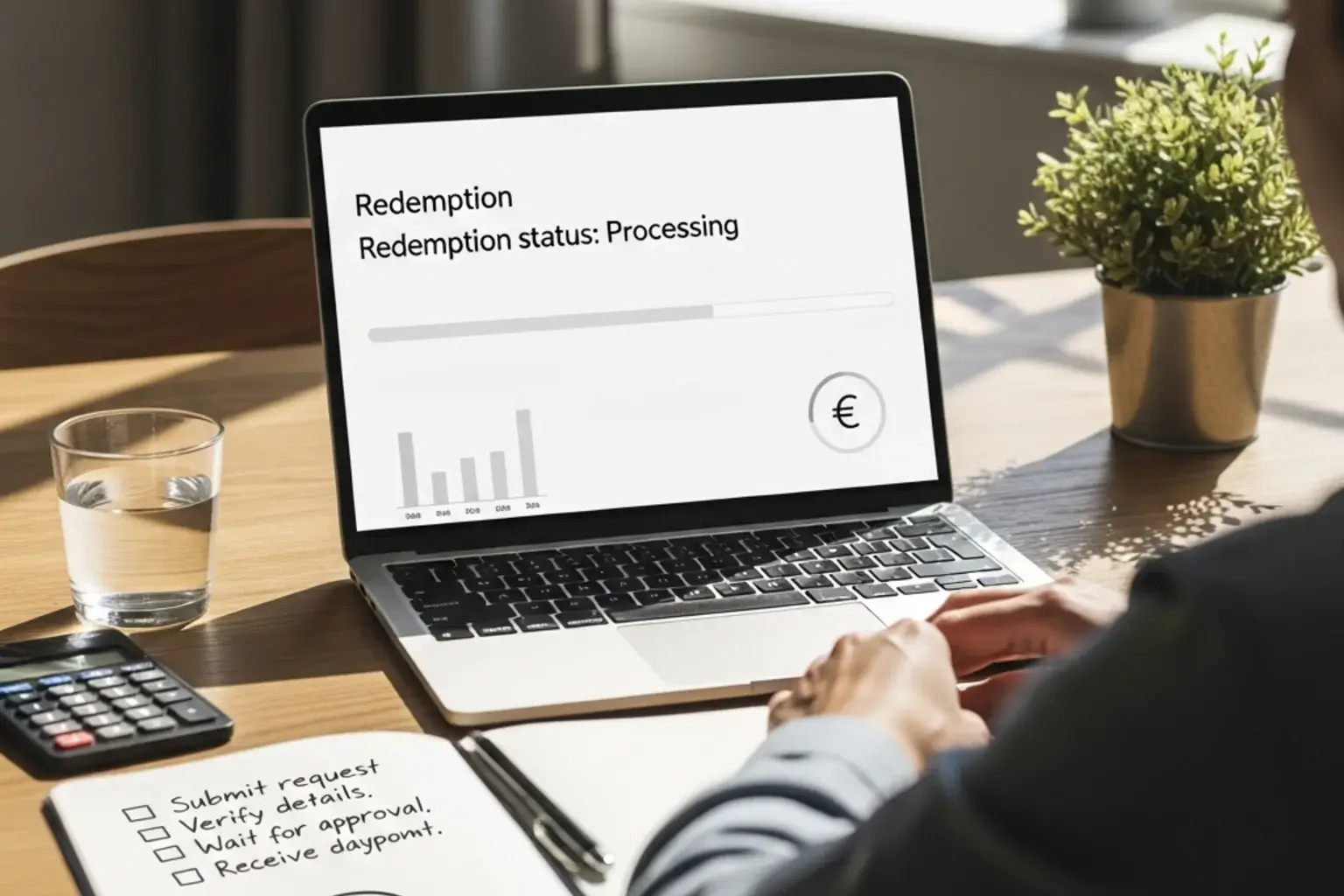
Minimum redemption thresholds range from 10 SC at WOW Vegas to 100 SC at Chumba Casino. This range matters more than it might appear. A free player collecting 0.5 SC per day through logins needs 20 days to reach a 10 SC threshold but 200 days to reach 100 SC — a meaningful difference in how quickly the free-play model delivers tangible results. Some platforms also impose maximum daily or weekly redemption limits, particularly for new accounts or unverified players.
The entire payout structure reflects the economics described earlier in this guide. The SC bundled with purchases, the RTP of the games, the playthrough requirements, and the redemption thresholds all work together to produce that 30 to 35 percent net revenue margin for operators. Understanding this structure matters at the redemption stage because it sets realistic expectations: a GC purchase does not translate into worth of redeemable SC.
Payment Methods Compared
| Method | Deposits | Withdrawals | Speed (Withdrawal) | Fees |
|---|---|---|---|---|
| Visa/Mastercard | Yes | Rare | N/A | None typically |
| ACH Bank Transfer | Yes | Yes | 3-7 business days | Usually free |
| Skrill | Yes | Yes | 1-3 business days | Platform-dependent |
| Bitcoin/Ethereum | Select platforms | Select platforms | Minutes to hours | Network fees |
| PayPal | Limited | Limited | 1-3 business days | Varies |
| Gift Cards | No | Select platforms | Instant to 24h | No cash value |
Payment method availability varies significantly by platform. Crypto-native casinos like Stake.us prioritize Bitcoin and Ethereum payouts, while traditional platforms like Chumba Casino rely on ACH and Skrill. The trend across the industry is toward expanding payout options, but no single platform currently supports all methods listed above.
KYC Verification
Know Your Customer verification is required before your first redemption at every legitimate sweepstakes casino. The process typically requires a government-issued photo ID (driver's license, passport, or state ID), proof of address (utility bill or bank statement dated within the last 90 days), and confirmation that you are at least 18 years old (21 in some states). Some platforms also require a selfie holding your ID for facial matching.
Processing times for KYC range from a few hours at automated platforms to 3 to 5 business days at operators with manual review processes. Common rejection reasons include blurry document photos, mismatched names between the ID and the account, and addresses in banned states. Players in states with active sweepstakes bans will fail verification regardless of document quality — the platforms geoblock at the redemption stage even if account creation was permitted.
Payout Speed by Method
Once KYC is approved, payout speed depends almost entirely on the withdrawal method. Cryptocurrency payouts are fastest — most platforms process Bitcoin and Ethereum withdrawals within a few hours, with the transaction completing on-chain in minutes. Skrill and similar e-wallets typically process in one to three business days. ACH bank transfers are the slowest, generally taking three to seven business days, with some platforms extending to 10 days for first-time withdrawals.
The industry average for a complete withdrawal cycle — from clicking "redeem" to funds arriving — is roughly five to seven business days for non-crypto methods. That includes internal review time, KYC checks (if it is your first redemption), and payment processing. Platforms with VIP programs often prioritize payout processing for higher-tier players, reducing wait times by one to three days. If payout speed is a priority, cryptocurrency-accepting platforms offer a clear advantage.
Sweepstakes Casinos vs Real-Money Casinos: The Structural Divide
The comparison between sweepstakes casinos and regulated real-money casinos is not just about legal classification — it is about fundamentally different economic structures that produce different outcomes for players. Understanding the differences requires looking at payout ratios, regulation, advertising, and market scale side by side.
Start with money. The US commercial gaming industry posted a record .72 billion in gross gaming revenue for 2025, a 9.2% year-over-year increase. Within that, iGaming (regulated online casinos and poker) hit a milestone in December 2025, surpassing billion in monthly revenue for the first time — .03 billion, up 22.4% from the prior year. Sweepstakes casinos, with estimated net revenue of .4 billion for 2024, represent a substantial but distinct segment that operates entirely outside that regulated framework.
The payout difference is the most consequential gap for players. Regulated online casino slots typically run at 94 to 97% RTP, meaning the house retains 3 to 6 cents per dollar wagered over time. Sweepstakes casinos return 65 to 70% of Gold Coin sales as Sweeps Coin prizes — a platform-level metric, not a game-level one, but it reflects the aggregate economics. A player buying 0 in GC packages at a sweepstakes casino can expect roughly to in SC prizes; a player depositing 0 at a regulated online casino can expect roughly to in theoretical returns from the same amount of gameplay. That is a 25-to-30-percentage-point gap that compounds over time.
The advertising landscape adds another dimension. According to AGA and Sensor Tower data, sweepstakes casino advertising accounted for 50% of all online casino ad impressions in the US in early 2025. Sweepstakes platforms advertise in states where regulated iGaming cannot, reaching a far broader audience with messaging that closely resembles traditional casino marketing. The AGA has argued that this creates consumer confusion — and their data supports the concern. An AGA-commissioned survey found that 90% of sweepstakes players recognize the experience as gambling, yet the platforms operate without the consumer protections that regulate actual gambling.
Tres York, VP of Government Relations at the AGA, has framed the issue bluntly: "These operators present themselves like legal, regulated platforms — but they operate outside the law and regulation." The AGA's position is not disinterested — traditional casino operators lose market share when sweepstakes platforms attract players in states without iGaming — but the structural critique has merit. Sweepstakes casinos offer a gambling-like experience without mandatory responsible gambling tools, state gaming commission oversight, or independently audited payout transparency.
The unregulated betting market is larger than most people realize. The AGA estimated that in 2024, unregulated operators — a category that includes sweepstakes casinos alongside offshore sportsbooks and illegal gambling operations — accepted 9 billion in wagers, representing .3 billion in lost revenue for the legal industry. Whether sweepstakes casinos belong in that category is the central regulatory debate, and the answer increasingly depends on which state you are asking in.
For players, the practical implications are clear. Regulated casinos offer higher RTPs, mandatory consumer protections, state-level dispute resolution, and transparent payout structures — but they are only available in a handful of states. Sweepstakes casinos offer nationwide access (minus banned states), free-to-play entry, and a functioning prize-redemption system — but with lower effective payouts, less transparency, and no regulatory backstop if something goes wrong.
Safety and Trust: Sorting Legit Platforms from the Noise
How to Verify a Platform's Legitimacy
The absence of centralized regulation means that legitimacy verification falls on the player. There are reliable signals to look for — and red flags that should stop you from creating an account.
Start with the AMOE requirement. Every legitimate sweepstakes casino must offer an Alternative Method of Entry. If the platform has no AMOE process — no mailing address, no instructions for requesting free entries — it is not operating a legal sweepstakes and should be avoided entirely. This is the most basic compliance marker.
Next, check the operator's identity and corporate structure. Legitimate platforms disclose their parent company, jurisdiction of incorporation, and contact information in their terms of service. VGW (Chumba, LuckyLand) is incorporated in Australia. Pulsz operates through Yellow Social Interactive. If the terms of service are vague about who runs the platform, or if the corporate address leads to a mailbox service, treat that as a serious warning sign.
Third-party reviews and complaint data provide additional context. Trustpilot ratings, Better Business Bureau complaints, and dedicated sweepstakes casino forums (Reddit's r/Chumba and r/sweepstakescasinos are active communities) surface real user experiences with payout reliability, customer support responsiveness, and account issues. No platform is universally praised — even market leaders have complaints — but a pattern of unresolved payout disputes or account freezes is a meaningful red flag.
Finally, look for membership in industry organizations. The SPGA (Social and Promotional Gaming Association) merged with the SGLA (Social Gaming Leadership Alliance) in September 2025 to form a unified industry body. Member platforms commit to a voluntary code of conduct that includes consumer protection standards. Membership is not a guarantee of quality, but it indicates a baseline level of industry accountability.
Responsible Gambling Tools and Data
Responsible gambling at sweepstakes casinos is a complicated topic because the platforms exist outside the regulatory framework that mandates responsible gambling protections at licensed casinos. There are no state-level requirements for self-exclusion programs, deposit limits, session timers, or reality checks at sweepstakes platforms. Some operators implement these tools voluntarily; others do not.
The data on player behavior suggests that these tools are needed. According to an AGA-commissioned survey, 90% of sweepstakes casino players recognize the activity as gambling — 59% say "definitely" and 31% say "probably." More critically, 80% of players report spending money at sweepstakes casinos on a monthly basis, and approximately 50% spend weekly. These are not casual engagement patterns.
The clinical evidence adds urgency. A 2024 systematic review and meta-analysis published in The Lancet Public Health found that 15.8% of online casino-style players — a category that includes sweepstakes formats — demonstrate problem gambling behavior. That was the highest prevalence rate among all gambling formats studied. The research synthesized data across multiple countries and study designs, making it one of the most robust assessments available.
Tres York of the AGA has characterized the consumer perception gap this way: "Consumers see right through the 'sweepstakes' casino facade and they're calling it what it is: gambling." The implication is that players need the same protections available at regulated casinos — protections that most sweepstakes platforms do not currently provide.
The regulated gaming industry has invested substantially in responsible gambling infrastructure. The AGA reported that its member operators have committed 0 million to responsible gambling programs, generating 3 million for state-funded intervention services. Sweepstakes casinos, operating outside that system, contribute nothing to those programs. For players who are concerned about their own spending patterns, the practical advice is straightforward: set personal limits before you start playing, track your GC purchases in a spreadsheet or budgeting app, use platform tools if they are available (deposit limits, session timers, cool-off periods), and seek help from the National Council on Problem Gambling helpline (1-800-522-4700) if gaming stops being entertainment.
Frequently Asked Questions
What are Sweeps Coins and how are they different from Gold Coins?
Gold Coins and Sweeps Coins serve entirely different purposes at sweepstakes casinos. Gold Coins are the platform's play-money currency — you purchase them for entertainment, and they have no cash redemption value. Think of them as arcade tokens. Sweeps Coins are promotional entries that can be redeemed for real cash prizes, typically at a rate of 1 SC to . You never buy Sweeps Coins directly. Instead, they are distributed for free: bundled as bonuses with Gold Coin purchases, awarded through daily logins, given at sign-up, earned through social media promotions, or obtained by mailing in an AMOE request. This separation is legally critical because it allows sweepstakes casinos to argue that players never pay for a chance to win a prize — the SC are always free. Only about 12% of players ever make a GC purchase; the other 88% play entirely on free SC obtained through these promotional channels.
Can you actually win real money at a sweepstakes casino?
Yes, you can redeem Sweeps Coins for cash prizes — and 68% of sweepstakes players report that winning real money is their primary motivation. The redemption process requires accumulating SC above the platform's minimum threshold (ranging from 10 SC at WOW Vegas to 100 SC at Chumba Casino), completing KYC identity verification, and selecting a payout method such as bank transfer, Skrill, or cryptocurrency. However, the effective payout structure is different from traditional casinos. Sweepstakes operators return approximately 65 to 70% of Gold Coin sales as Sweeps Coin prizes, meaning the platform retains 30 to 35% as revenue. By comparison, regulated online casino slots typically return 94 to 97% of wagers to players. The real-money potential is genuine, but the economics are less favorable than what regulated casinos offer. Payout processing typically takes three to seven business days for bank transfers, one to three days for e-wallets, and minutes to hours for cryptocurrency.
In which US states are sweepstakes casinos legal?
Sweepstakes casinos currently operate in approximately 44 US states. The platforms are accessible anywhere that has not enacted a specific ban. As of early 2026, six states have passed legislation explicitly prohibiting sweepstakes casinos: California (AB 831, effective January 2026), New York (SB 5935), Connecticut, Montana, New Jersey, and Nevada (through expanded enforcement powers). Florida's HB 591 is pending in 2026 and would classify sweepstakes casino operation as a third-degree felony if passed. States with regulated iGaming — New Jersey, Connecticut, and Nevada among them — have been among the most aggressive in banning sweepstakes platforms, largely due to lobbying from licensed casino operators who view sweepstakes as unregulated competition. The legal landscape is shifting rapidly; players should verify current legality in their state before creating an account, as new legislation can take effect between the time a platform appears available and the time a player attempts to redeem SC.
Our Methodology
This guide was compiled using publicly available data from regulatory bodies, industry research firms, and peer-reviewed academic publications. No sweepstakes casino operator paid for placement, review, or favorable coverage in this article. We do not maintain affiliate relationships with any platform discussed here.
Statistical data was sourced from the following categories of first-party and authoritative third-party sources: KPMG industry primers, Eilers & Krejcik Gaming's Social Casino Tracker and EKG Line forecasts, the American Gaming Association's revenue trackers and research publications, VGW's published financial filings, the Social and Promotional Gaming Association's public disclosures, Gaming Innovation Group investor presentations, and the Lancet Public Health's peer-reviewed meta-analyses on gambling behavior.
Expert quotes were drawn from on-the-record statements made in press releases, industry conference panels (G2E, NCLGS), published interviews, and legal filings. All quotes are attributed to their original speakers and linked to the source publication. We included perspectives from both sides of the regulatory debate — the AGA (which opposes sweepstakes casinos) and the SGLA/SPGA (which represents them) — to present a balanced view of an inherently contentious topic.
Platform data (game counts, bonus amounts, minimum redemption thresholds, payout methods) was verified at the time of writing in March 2026. These figures change frequently as platforms update their offerings. We recommend verifying current details directly at each platform's website before making decisions based on comparative data.